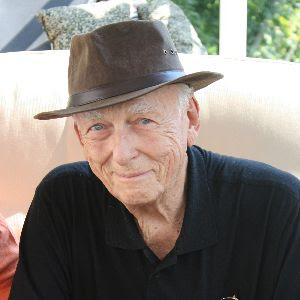
The Friends of Hibou will conduct the first of Grey Sauble Conservation’s new guided hike series, as described on their website at www.greysauble.on.ca and at friendsofhibou.com under Events.
“If you’re feeling unsettled about the return to work/school or are just interested in learning about GSCA properties and how being in nature can help during stressful times, this hike series is for you!
First up in the hike series is Hibou Conservation Area!
Join GSCA and the Friends of Hibou to explore the trails, take deep breaths, and enjoy all the physical and mental health benefits of being in nature at a GSCA property.
August 25, 2020: Learn about Nature – All ages are welcome (10:00am – 12:00pm) Walk with Bob Knapp along the shoreline loop (The Point Trail) across from the pump house parking lot at the south end of Hibou where you will see views of the changing rough shoreline (approx. 45 mins). This will be followed by an optional walk along the Interpretive Trail where you’ll hear a description of the geography and plant life, as well as how the trail came to be (approx. 1.25 hours). – total 2 hours.
September 1, 2020: Forest Bathing – Ages 12 + (10:00am – 11:30pm) Experience a deeper connection with the forest on a slow, almost meditative walk with Marie Knapp along the shoreline loop (The Point Trail) across from the pump house parking lot at the south end of Hibou. You will be guided through a few experiences as you relate with the forest in new ways and experience reduced stress (approx. 1.5 hours).
Advance registration is required. Please RSVP at explore@greysauble.on.ca (space is limited to ensure physical distancing). More information will be provided upon registration.
Pack a lunch and enjoy Hibou beach following the hike”
The Sources of Knowledge Forum in Tobermory has also been affected by COVID-19 and has this message on their website at www.sourcesofknowledge.ca Attention all 2020 Forum registrants: Unfortunately, due to the circumstances surrounding the COVID 19 pandemic the SOK Board has decided to move this year’s forum. Our administrator will be directly contacting attendees and sponsors shortly. We plan to reschedule this year’s forum topic for April/ May 2021. Please stay tuned for more details and stay safe.
On July 30th the Owen Sound Field Naturalists (OSFN) offered a Moth Night called “Introduction to how to attract and identify moths” led by Alan Macnaughton. Held in the late evening at MacGregor Point Provincial Park, the event was very successful, and Alan has offered to hold more Moth nights for the club in the future, possibly even this September. Butterflies are also being observed in many areas these days. Chris Rickard reported:”Today I was at our cottage on the Bruce….After the rain stopped, there were 7 White Admirals on the buddleia bush simultaneously!”
White Admiral Butterfly at Isaac Lake (June 2020) Photos by Bruce Edmunds
On August 19th OSFN’s Julie Lamberts offered What bugs are living in the stream? specifically the Indian Creek in Georgian Bluffs. Julie demonstrated the “kick and sweep” method for collecting benthic invertebrate samples. Her sample was divided up among all participants, who had the opportunity to sift through and identify bugs using a magnifying glass and some charts. Benthics were identified to family level. Discussions about how benthic communities are used as bioindicators of stream health took place. John Bittorf of GSCA, was also on hand, and provided additional information including local conditions affecting stream health.
Benthic outing. Photo by Julie Lamberts
OSFN has more field trips planned with some of them filling up very quickly. David Morris has offered to repeat both of his planned flora themed outings, for August 25th (invasives), and September 15, (goldenrods and asters) on the next day. Plans are also underway for monthly outings with the Young Naturalists Club.For more details on any of the above, please visit www.osfn.ca
The Bruce Birding Club members and those with the Beaver Valley Birding Club have been observing many of the migrating shorebirds, some locally, and others in such areas as Mitchell, and in the Luther Marsh, where a special treat this year was a Swallow-tailed Kite, having strayed north from its usual habitat in the USA.Various blackbirds have been seen in small flocks recently, and very large flocks have been seen in Meaford in the first week of September for several years. Tiny hummingbirds have also been busy visiting flower blossoms, while I have been seeing more Red-tailed Hawks recently, circling among the clouds.
Eastern Bluebirds. Photo by Nigel Eves, Meaford, August 16Eastern Bluebird. Photo by Nigel Eves, Meaford, August 16Hummingbird (Photo by Carol EdwardsRed-tailed Hawk, photo by Mike Tettenborn August 19
To close, two Nature quote from Rod McKuen:
The long tall grass Waving in August Blessings in shades of green
_________________ And the marvelous clouds sail by Marvelous clouds Aloft in the soft summer sky Marvelous clouds
Photo By John DicksonPhoto By John DicksonPhoto By John Dickson
The Owen Sound Field Naturalists (OSFN) held its Annual General Meeting online, June 11. The Board of Directors underwent some changes of personnel, led by incoming President Pam Kinchen, as Gord Toth moved to Past President. Outgoing Past President Kate McLaren was especially thanked for her important contributions to the club. For the complete slate of directors and more, please visit www.osfn.ca
The Sources of Knowledge Forum for 2020, based in Tobermory, is currently on hold until the end of July, when a decision is expected to either try for later this year, or shift to 2021 with the topic – Plastics in the Great Lakes: Finding Solutions Together. For more details please visit https://www.sourcesofknowledge.ca/
Many naturalists in the Grey Bruce area will remember George Peck, who passed away, in Toronto June 20, at the age of 94. After retiring from his veterinary career in the Oakville area, George lived for over thirty years in Thornbury, while continuing to be a prolific wildlife photographer and nature writer, with images and writings published in over 90 books, magazines and journals. George was passionate about the Bruce Peninsula and its surrounding area and loved the people he met through their mutual interest – birds. An Honourary Life Member of OSFN, many will also remember George Peck’s acclaimed exhibition of bird photographs gracing the walls of a very new Leonard E. Shore Memorial Library in Thornbury. I know that I do.George was a distinguished ornithologist in Ontario for over 50 years. He was appointed a Research Associate at the Royal Ontario Museum in 1976, was the Coordinator of the Ontario Nest Records Scheme for 48 years, and co-authored Breeding Birds of Ontario Nidiology and Distribution.
Due to current circumstances, a Celebration of George’s life will be held at a later date when restrictions have been lifted. In the meantime, think of him often and remember him well. Donations in George’s memory may be made to the Royal Ontario Museum, Department of Natural History.
GEORGE KELDAY PECK 1925-2020.
The North American Butterfly Association Count administered by MacGregor Point Provincial Park was held on July 4th, from 10AM to 4PM. Due to Covid restrictions, results were tabulated remotely, rather than with a gathering at the Provincial Park. Audrey Armstrong conducted this annual butterfly count along with her daughter Bella Waterton, and Barbara at the property of Pat and Barbara Martin along the Saugeen River near Port Elgin. Armstrong reported that “we recorded fewer than usual monarchs. The World Wildlife Fund data from the Mexican overwintering sites showed a drop by about half the monarch population compared to last year. However, the second generation is increasing in numbers now, with all the excellent milkweed habitat in Grey Bruce. Canadian Tiger Swallowtail numbers were up, this year as were Great Spangled Fritillary. Perhaps all the invasive wild parsnip is contributing to the Swallowtail abundance?”
In addition to extra watering and mulching sessions, by volunteers of NeighbourWoods North in the Forest of Hope and Healing, during the hot dry stretch of weather recently, a new venture got underway at the Hospital grounds in Owen Sound. On July 6th, Krista McKee of NeighbourWoods North shared this report:”The Welcoming Garden Committee is overwhelmed with the local support for our project! Funding from the TD Friends of the Environment has been the backbone of the project along with a generous donation from the Grey County Master Gardeners. The Committee shopped locally in sourcing the plants, mulch and the excavation of the island at the front of the Owen Sound hospital. A special thank you to Adam MacDonnell and the wonderful staff at Grey Bruce Health Services Owen Sound Hospital has been much appreciated. Our project is not completed – shrubs and bulbs will be planted in the fall and the final touch to the garden will be an art piece. So stay tuned as the garden will continue to take shape. “Since then, frequent watering ensured that the new plants had a good start, followed up by the generous rainfall received this past week. I have visited there several times and have observed that the planting layout, colours and plant varieties are exceptionally pleasing. I encourage visitors to take time to enjoy this valuable addition to the hospital site.
The Welcoming Garden at the Owen Sound Hospital (photo by John Dickson)The Welcoming Garden at the Owen Sound Hospital (photo by John Dickson)
From Fred Jazvac of the Bruce Birding Club: “Just in case you didn’t know, the fall migration is now on, and first on deck it is shorebird time – for some of them, they start heading south in July. In the West Perth Wetlands reported yesterday (July 11) were Greater and Lesser Yellowlegs, Short-billed Dowitcher, Spotted Sandpiper and Least Sandpiper.”
Dickcissel near Kincardine (Photo by David Turner)Lesser Yellowlegs Kincardine area (Photo by David Turner)From Birding the Beaver Valley Eastern Meadowlark by David Turner, June 27 near Duncan, Beaver ValleyBayview Forest with Mark Wiercinski (on right). Photo by John DicksonBayview Forest Ovenbird (Photo by Bill Hatten)
Working within the safety guidelines of COVID-19, OSFN held several field trips: two more in the Bayview Forest with Mark Wiercinski, on June 21; Birding the Beaver Valley with David Turner on June 27; a Railtrail Ramble led by David Morris on July 7. Of the latter, Nancy Brown shared these comments: The wildflower hike led by David was well prepared, expertly narrated and filled with ‘wow’ factor, along with butterflies, a family of kingbirds and turtles, for the assembled group of nature enthusiasts. David even prepared an Excel spreadsheet of the 30 species identified (download the sheet). Just a fine outing. Dusty, hot, sweaty and happy!
Spreading Dogbane (Photo by David Morris)Marsh Vetchling, one of our few native legume family species. (Photo by Nancy Brown)Hike Leader David Morris (Photo by Nancy Brown)
On Monday July 13, eight Friends of Hibou got together, while keeping their distance, loading, wheeling and spreading a load of gravel onto a last stretch of a sometimes wet section of the popular Hibou Interpretive Trails.
Birds Canada has added its voice to the call for the U.S. government not to strip away critical protections in the Migratory Bird Treaty Act. The proposed “deregulation” will affect migratory birds in Canada and many other nations, not only the U.S. It will make permanent a 2017 Solicitor’s Opinion to end the prohibition on “incidental take”. This is the killing or “taking” of migratory birds by industrial activities; for example, birds flying into uncovered oil pits and other predictable, avoidable mortality. To learn more about this campaign visit www.birdscanada.org
The Bruce Grey Woodlands Association has an upcoming outdoor activity for its members.From their website at https://bgwa.ca/ Great news, BGWA member events are re-starting! Keep Saturday, July 18 open for an interesting tour of a member property near Markdale. The event will be structured to incorporate safe distancing and conform to group size limits, with 3 separate walk-thrus available at 10AM, 1PM and 4PM.
Environmental Heroes Recognized for Their Outstanding Role in Conservation. Ontario Nature’s 2019-2020 Conservation Award Recipients Announced
Ontario Nature, a leading environmental organization, has recognized the exceptional contributions to nature conservation made by organizations, individuals and companies whose dedication inspires us all to continue to fight to protect nature in Ontario.This year, the awards celebrated 10 inspirational winners who are building a natural legacy for future generations, and are owed a debt of gratitude for their tireless work.On July 16, Ontario Nature (ON) announced the winners of its 2019-2020 Conservation Awards, with two local winners included:
The Huron Fringe Birding Festival Organizing Committee was the recipient of the W.E. Saunders Natural History Award for its successful program that raises awareness of nature among people of all ages.
Photo is of the committee as of April 12, 2019 (supplied photo)
Back: Marilyn Ohler, Bette Jean (BJ) Martin, Norah Toth, Doug Pedwell, Arlene Richards, Judy Duncan, Becky Grieveson, Jim Duncan, Fred Jazvac
Front: Kathleen Chayer, Margaret Anderton, Bruce Edmunds, Liz Addison, Norma Nanni, Nancy White, Carole Lupton, Anne Cathrae, Lynne Richardson
Missing: Bob Taylor and Doug Martin.
Stewart Hilts, a resident of Meaford, received the Ontario Nature Achievement Award for his lifelong commitment to conservation and his dedication to helping Ontario Nature to achieve its goals.
Stew Hilts, Ontario Nature Achievement Award recipient
Congratulations to these most deserving members from our community, many of whom are OSFN members, and to the rest of the Ontario Nature Award winners, of which you can learn more here – ontarionature.org/conservation-awards
To close, and apropos to the current COVID-19 pandemic, a Nature quote from Jennifer Lee Carrell’s The Speckled Monster, (smallpox) about the precursor to vaccine – inoculation – that was being introduced in Britain, and in Boston, after learning of its effectiveness and success in Constantinople and in Africa, in limiting the epidemic/pandemic spread of smallpox almost three hundred years ago. “On July 26, 1723 Dr. Zabdiel Boylston, (seeking personal time with Nature, while finally winning his battles against naysayers with positive results for his patients) rode south across the Boston Neck to race through wheeling clouds of birds far out into the salt marshes at low tide. It was a form of worship, he thought, … this exhilaration in the glories of wind, wings, and horses…”
Cardinal family (Photo by Nigel Eves)When you get out of the shower and discover there are no towels.
As the Spring season draws to a close, and regional isolation restrictions are gradually being relaxed, Naturalist clubs are once again able to offer field trips with knowledgeable leaders and guides, with smaller numbers of attendees, (first 5 and now 10) all doing their best to enjoy and learn, while maintaining a safe distance from each other, to still limit the spread of COVID-19. However, large meetings with speakers, and socializing are still a long way off.
First Monarch of the season. The worn appearance testifies to the long flight she had to return here. Hopefully she finds the milkweed that is already growing so she can lay her eggs and continue the cycle. (Photo by Carol L. Edwards)
In the meantime, many species are producing and raising young families. Eggshells are found scattered here and there, usually a little away from the bird nests. In May, Pam Binnendyk witnessed a family of Red Squirrels with four babies, who had taken over a hole previously prepared by a pair of Pileated Woodpeckers. “This was a surprise. We are overrun with squirrels of all colours here, but we don’t often see their young still in the nest. It’s obvious that the Momma squirrel moved them there as they are too big to have just been born 2 weeks ago when the Pileateds were in residence. They must be about 6 or 7 wks. Cute….til they start coming to my feeders.”
Momma is 2nd from the left.. (Photo by Pam Binnendyk)
While I was exploring a nearby wooded area, I watched as a wee rodent climbed straight up the side of a tree trunk. When it had climbed about 10 feet (3 metres) it suddenly lost its grip or confidence, (or both) and fell down to the forest floor of leaves, etc. I thought perhaps it was a baby red squirrel, but suddenly there was an adult chipmunk on the side of the trunk, ready to protect its youngster.
Others in the area have been finding nests, with eggs, of such birds as Killdeer, and Gray Catbird. There seem to be many sightings this Spring of Baltimore Orioles, and a friend of mine even has an Orchard Oriole staying around. I have also observed a few Eastern Bluebirds this Spring, although Tree Swallows often take over Bluebird nesting boxes.
The Beaver Valley Birding club members are very helpful with ID for birders who aren’t quite sure what birds they have photographed and then posted on the club’s facebook page. As can be expected, there are many wonderful photos there too.
Eastern Bluebird (Photo by John Dickson)Clay-coloured Sparrow (Photo by David Turner)
Ann Schneider of The Georgian Bluffs Climate Action Team reports that “On May 27th members participated in a zoom discussion after viewing “Resilience – A Climate Change Documentary of Hope”. The film can be viewed on Youtube https://www.youtube.com/watch?v=8i0mbMcQmrg. The evening involved brief presentations by Liz Zetlin, the producer/director of the film, and Dr. John Anderson, the scientist featured in the film. The discussion was facilitated by Marilyn Struthers. Interest in John’s work was strong so he was invited to speak at the group’s monthly zoom meeting on June 8th where he spoke about the theory of denialism and the importance of both personal and systemic change to address climate change. Discussion was lively as the members talked about the balance of personal, systemic and natural solutions to climate disruption. To continue the learning and discussion Dr. Thorsten Arnold will be speaking about Nature Based Solutions at the next zoom meeting on July 6th at 7:00 p.m.”
On June 6, Transition Meaford hosted a virtual Eco Fair entitled Just Cool It. Among other activities, it featured workshops and online discussions with the presenters. Now that the event is over, I highly recommend visiting their website at https://www.transitionmeaford.org/eco-fair/ where those very engaging exchanges have been recorded and can still be viewed.
Kathleen Chayer of MacGregor Point Provincial Park has confirmed for me that some nature activities are now available in the Park, and that now some limited washroom facilities/privies are too.
Bob Bowles is offering the acclaimed and popular Ontario Master Naturalist Certificate Programme, initiated by him, beginning July 17. The Summer 2020 certificate program will be delivered via a blended learning environment that will enable you to learn about the breadth of topics explored in this certificate. Through a series of eight modules, participants will work through material at their own pace, including interactive PowerPoint slides, photographs and video produced specifically for this program. I asked Bob about the possibility of any “live instruction in the field this year”, to which he replied – “Hi John;My students tell me that there is no experience like being out in the field with me and finding something serendipitous which I tell them about on the spot. This has been the highlight of my program but now with COVID-19, we can’t do that format. The idea right from the start of the first program was to have a day in the field together in the fall after the course if conditions warrant it at that time. Hard to predict what the fall will look like and we may have another spike in cases with all the opening up and not following social distancing rules. We do know it has a high percentage possibility of returning in the fall even if it declines by late summer. We hope to have a field day together in the fall for each of these spring and summer on-line courses but who knows what the fall holds for us.” Bob
Fringed polygala (photo by Barbara Palmer)Yellow Lady’s Slippers (photo by Barbara Palmer)Starflower (photo by Barbara Palmer)
The Owen Sound Field Naturalists members were able to visit, in small numbers, for three outings at an area Nature gem known as Anglesea, guided by owner Don Rawls. OSFN’s Pam Kinchen tells us: “A beautiful, mostly old growth forest over steep ridges and valleys. Many birds both woodland and wood warblers wereseen and heard. Lots of pioneer history too. Don is a generous host and loves to tell you history. Very beautiful property and giving you a sense of forest tranquillity.”
As Neil Baldwin shared “Anglesea was a nice amble through varied terrain and woodlands, including a stunning hillside of trilliums and a grand old sugar maple…”Neil also led a Forest Bathing session, a first for OSFN, and for some, an effective coping tool.
As Heather Drummond reported – “It was such a magical experience on your trail. The layout of it is very conducive to connecting with Mother Earth. I found it very relaxing and when I was at my crazy paced job today I could feel how relaxed I had been while enjoying the Soul Trail.
It is a treat to be able to envision the spaces along the trail, i.e. the Gathering place, Labyrinth and the Sweet blossoms of the Apple tree I was able to recline under and observe the many varieties of bees coming and going, the thunderstorm rolling in. It brought a smile to my face and a sense of relaxation to me during my crazy day today.”
Biologist Mark Wiercinski has, so far, led one Birding, Botany and Ecology hike at Bayview Forest this month, and is now offering at least two more. Jeannette Parry says “I was lucky enough to go on the hike yesterday morning, it was of course utterly amazing! Mark should be classed as a National Treasure! Please keep encouraging him to do hikes, presentations…whatever. He has so much to offer and is such a great presenter in any setting. Thanks for the opportunity.”
OSFN is also holding its Annual General Meeting, through the zoom format, starting at 7PM Thursday June 13, to be able to meet its club guidelines, and to begin preparing for the 2020-2021 season. Details of this and other activities are available at https://owensoundfieldnaturalists.ca/
The NeighbourWoods North team also celebrated the flowering of the Makamik Crabapple trees, planted two years ago, and which were recently in their first blooming stage, lining the west entranceway to the Hospital, in Owen Sound. In spite of Covid-19, the work goes on this year, caring for the Forest of Hope & Healing, replacing and adding trees, mulching, weeding, trimming, and pruning. are happening right now in small groups or dyads at the hospital. In early summer, preparations will be made to plant a Welcoming Garden on the traffic island across from the main hospital entrance. When the ground is dry enough to handle large equipment this summer the first portion of the Healing Path will be built. More information, including how to volunteer at this time, can be found at www.neighbourwoodsnorth.com
To close, a Nature quote from George Bernard Shaw’s Nobel Prize winning play, Saint Joan, written almost 100 years ago. In a scene near Orléans, France, along the banks of the “silver Loire” river, it is evening in Spring, 1429, with an unrelenting wind from the East. Dunois, a General, and his page, are both affected by the loveliness of the Loire in Springtime and are so excited to see “a flash of blue” of the female Kingfisher, and then the male Kingfisher, flying past the reeds, as with their eyes “they follow the flight till the bird takes cover.”
Although many Nature groups and their individual members in our area have curtailed their usual get-togethers, and group activities due to COVID-19, some of these have found ways to pursue their interests in a limited capacity, whether it be in their own backyards, or immediate neighbourhoods. Some, while practically shut-ins, do get out while doing their bi-weekly shopping excursion, take their vehicle for a short drive, and observe the many changes of the season, usually within a five mile radius, or so from their own locale.
Reports are shared about the parades of backyard birds “just passing through” or of their nesting preparations, perhaps results – eggs, or fledgling Robins who have escaped their own version of isolation, and found themselves on the ground, and even more isolated, but are finding their own singing voices – “Help!”, while a parent stands guard nearby, to keep their offspring safe from predators.
Baltimore Oriole in Owen Sound May 14 by Carol L. EdwardsA few lovely breeding plumage male Yellow-rumped (Myrtle) Warbler about. This one finally held still. (Photo by Carol L. Edwards)And another Yellow-rumped (Myrtle) Warbler that thought he was hiding…ha. (Photo by Carol L. Edwards)
Many urban residents in Grey and Bruce Counties are reporting greater numbers this year of squirrels with mostly black fur, but with reddish (Irish?) tails, always on a mission through their territories, or stopping to dig up spruce and pine cones for a snack, and then burying them again for a future nourishment interval. Several times now, I have seen a Chipmunk nibbling on the seed safely packaged within the swollen section of a Maple key.
Thorsten Arnold presented an engaging and informative four part Webinar Series: How Can Food Systems Regenerate Our Earth? that was originally to be held at the Harmony Centre. Although the webinar attracted only a small audience, it was an eloquent presentation, supplemented with effective and inspirational support materials. I am looking forward to learning more from Thorsten’s endeavours.
The Celebrate Earth Week event featuring Jarmo and Noah Jalava also worked very well, and was actually viewed by a larger audience than would have been on hand if the event had been held on the Chi Cheemaun. If you missed it, this informative and entertaining presentation can still shared and viewed at this link. https://youtu.be/q67x2NCEDTE
The Bruce Birding Club (BBC) has held two online sessions where members can join in to share bird sightings and even have a brief workshop on warbler identification, to help novice ornithologists familiarize themselves with the various field marks to look for, and for veteran birders refresh their skill set. These “zoom” meetings also provide social interactions, to offset the feelings of isolation, and a reminder that they are all valued members “of the flock.”
Kincardine, May 13, 2020, Cedar Waxwing (Photo by Bruce Edmunds)Solitary Sandpiper (Photo by David Turner)Female Hooded Merganser. May 13 (Photo by David Turner)
However, such traditional large group gatherings as the Owen Sound Field Naturalists (OSFN) monthly Indoor Meetings, are a victim to the new reality. Bob Bowles, who was to present a Turtle Talk on May 14, sent me this new version of his itinerary: “Yes, I assumed that it (Turtle Talk) would be cancelled given how COVID-19 has changed the whole world. I have cancelled all my speaking engagements for the rest of the year. I don’t think we will be back to normal (or the new normal) until 2021.Therefore, I have cancelled my Ontario Master Naturalist Certificate Program which was full this spring and not planning any fall workshops on mushrooms and other subjects. With the aid of Lakehead University I am setting up the whole program on-line with virtual field trips which should work very well. With the new set up, I will have an expert technical computer facilitator and an professional videographer to work with me. I hope to have an introductory test program by May and then the full course by late May. COVID-19 has changed the whole world and we will never do some things the same again”
With the recently revised guidelines some naturalists are going out in small groups, (up to five), while maintaining some personal space at the same time. A long-time hike leader at Point Pelee, shared that he went, the other day, to a local Provincial Park, early in the morning, “but still with a ten foot pole” – his tripod with spotting scope, and legs extended – but met no other humans on the trails there.
There is a newly formed Georgian Bluffs Climate Action Team who are offering a special event – for which participants are invited to view the locally produced, and globally relevant Resilience – A Climate Change Film of Action and Hope, within about 24 hours prior to a zoom discussion meeting at 7PM May 27. Visit this link to watch the film and register for the zoom discussiona fterwards.
The NeighbourWoods North team has just announced that although it is a late Spring, the good news is that the Hospital Naturalization Project is on! The team has been very busy developing a comprehensive programme for the Spring and will hit the ground – digging – this Friday, May 15 at 1 pm, when they will be planting about a dozen 8 to 12 foot bare-root trees – maples, hackberry, and locusts. Because they’re bare-root trees they need to get them in the ground quickly. You’re welcome to join them while practicing social distancing and planting. Complementary projects include a Welcoming Garden, Forest of Hope & Healing and a Healing Path. Each of these can benefit from volunteer participation. To learn more, and perhaps offer your help, please visit https://www.neighbourwoodsnorth.com/
To close, a Nature quote from Markdale’s most famous Naturalist, Gardener, Writer, and reluctant Lawyer, I.B. (Dick) Lucas from The Footloose Gardener, published about sixty years ago: “There are few spots lovelier than Southern Ontario, and it is in one of its most seductive moods in the first week of May. The wild plums, and they are thick on the roadside and in the fence corners, are a mass of snowy blooms. There is a faint fresh perfume of them in the air…There is a soft undulating rhythm in the contours of the hills and valleys… and little wooden bridges that span the flooded streams.”